Choosing who builds your website means choosing a partner for a project that runs weeks or months. Get it right and things flow. Get it wrong and you lose time, money and sometimes have to start over.
Most business owners aren't technical, so judging who's good is hard. The good news: you don't need to code. You just need to ask the right questions and pay attention to how they're answered.
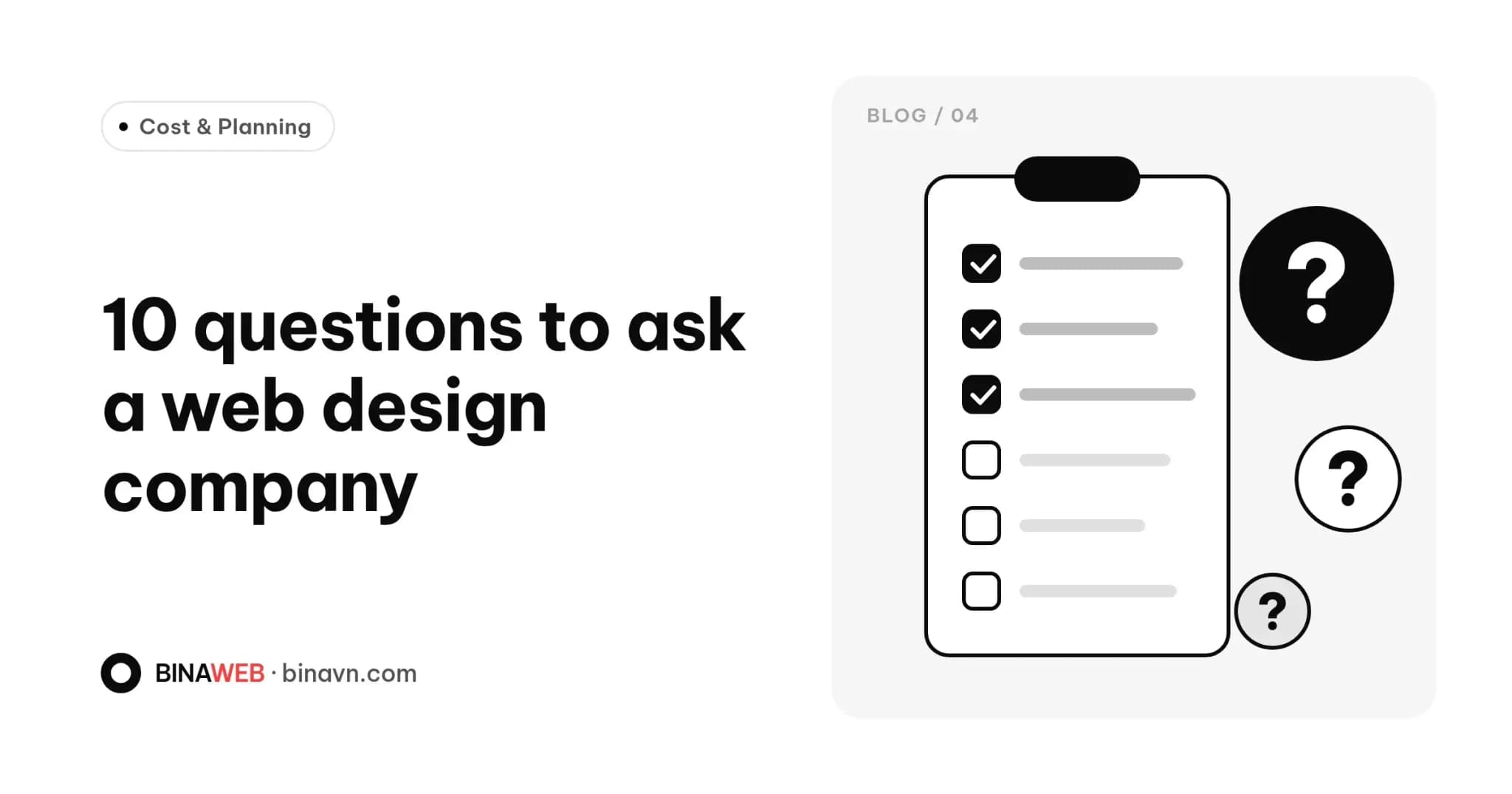
Here are 10 questions we suggest asking any provider, Bina included.
Before you ask: know what you need
Spend 15 minutes writing down:
- What the site is for (introducing the business, selling, generating enquiries, hiring).
- Who your customers are.
- The pages and features you have in mind.
- Your budget and target launch date.
- A few sites you like, and why.
With this in hand, conversations are more productive and quotes are easier to compare.
The 10 questions
1. "Who will actually work on my project?"
Some firms have great salespeople while the real design and development happens elsewhere, sometimes outsourced. Information passed through layers gets distorted.
A good answer names who's responsible and whether you can talk to them directly. At Bina, you work with the people building your site, with no middlemen.
2. "Can I see sites you've built?"
Look at live projects. Open them on your phone and click around rather than judging polished screenshots. Ask for work close to your industry or size, and check whether those sites still run well.
3. "What's included in the scope, and what isn't?"
This is the big one. Ask for a concrete list: how many pages, which features, who provides content, whether basic SEO is included. What's *excluded* matters just as much. Many disputes come from two sides reading "all-inclusive" differently.
4. "What's the process and timeline?"
A professional team can walk you through discovery, design, approval, development, testing and handover: how long each step takes and what they need from you. For a typical example, see The website build process.
5. "How many rounds of revisions do I get?"
Get the number of revision rounds for design and content, plus the cost of extra changes. You'll give feedback with confidence and avoid end-of-project surprises.
6. "Can I update content myself?"
If you want to post articles, change prices or swap images, you need an easy admin panel. Ask whether training, docs or video guides are included. Paying a developer for every text change adds up.
7. "Who owns the domain, hosting and code?"
The domain should be registered in your name. Ask whether you can move the site elsewhere if you part ways and whether all accounts are handed over. People tend to forget this until they want to switch and discover they control nothing.
8. "Will it be fast and work well on mobile?"
Most visitors are on phones. Ask which devices they test on and whether they optimise load speed. Open their sample sites on your own phone and judge for yourself.
9. "What support do I get after launch?"
Who fixes bugs after go-live, how quickly, and at what cost? How are maintenance, security updates and backups handled? What does year two cost?
10. "Can you itemise the quote?"
A transparent quote breaks down design, development, features, content, domain and hosting. Itemised quotes are easier to compare, and you know what you're paying for. For typical cost components, read How much does a website cost in Vietnam?.
Red flags
- A very low price with a vague scope. Cheap isn't bad; unclear is.
- Promises no one can guarantee, like "page one on Google in a week".
- No questions about your business, just "how many pages?"
- Dodging questions about ownership of the domain and code.
- No contract or written agreement.
- Pressure to sign today with a "limited-time" deal.
Green flags
- They ask about your goals and customers before quoting.
- They'll say "you don't need this yet" to save you money.
- They explain things in plain language instead of hiding behind jargon.
- They provide a process, timeline and written quote.
- They take on a manageable number of projects so each client gets proper attention.
That last one rarely comes up, but it matters. Bina deliberately limits how many projects we run at once, so every site gets built with care and every client gets timely replies.
Freelancer, agency or studio?
- Freelancer: flexible and often cheaper, but everything rests on one person.
- Large agency: plenty of resources, but higher costs and more layers between you and the work.
- Small studio working directly with clients: a balance of flexibility and process. That's how Bina chooses to work.
None is right for everyone. What matters is knowing what you're choosing and what you're trading off.
The bottom line
You don't need to be an expert to pick a good web partner. Know your needs, ask these 10 questions and watch how they answer: clearly or evasively, focused on you or just on the contract.
Feel free to start by putting these questions to us. Get in touch here, or review our packages and scope on the Services page.