When you build a website, three terms come up constantly: domain, hosting and SSL. Plenty of business owners leave all of it to the developer, then only start asking questions when something expires, they want to switch providers, or the browser starts flagging the site as "Not secure."
You don't need to become an expert, but you should know enough not to be caught out. Here's how the three fit together, using a familiar example: opening a shop.
Think of it as a shop
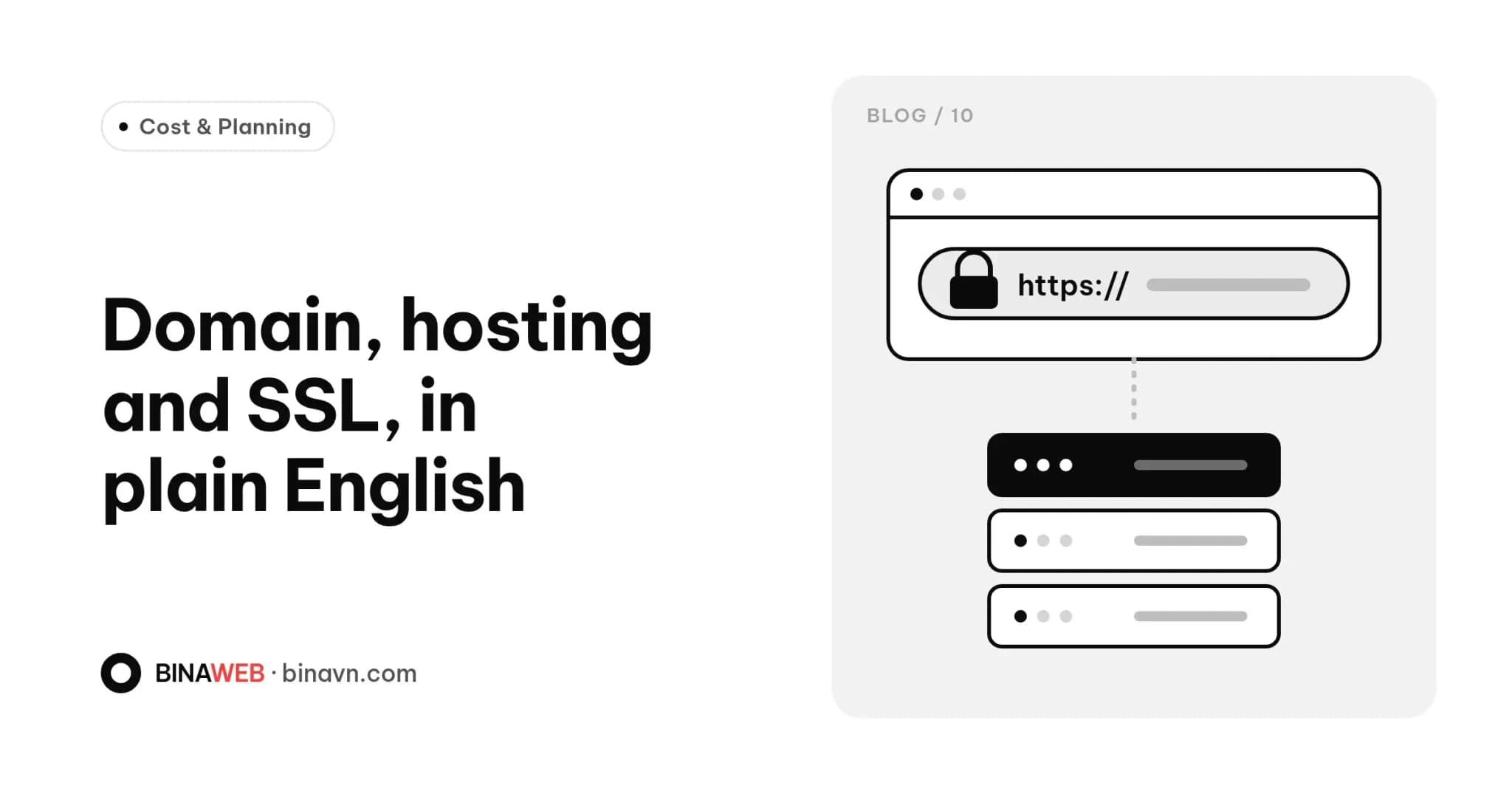
- The domain is your shop's address, what people type to find you, such as binavn.com.
- Hosting is the premises, where all your stock lives: the files, images and data that make up your site.
- SSL is the lock on the door, encrypting what passes between your customers and your shop.
Without all three, the shop can't open.
Domains
What is a domain?
A domain is the memorable address of your website. Instead of remembering a server's numeric address, people just type your domain. Domains are registered for a set period and must be renewed.
.vn or .com?
There's no single right answer:
- .vn is Vietnam's country domain, managed by VNNIC (the Vietnam Internet Network Information Center). It signals straight away that you're a Vietnamese business, which suits a mostly local customer base. You'll need to provide accurate registrant details when you register.
- .com is the most widely recognised domain worldwide. It suits businesses with international customers or ambitions.
- .com.vn is another Vietnamese option, often used by companies to signal a commercial presence.
Many businesses register both .vn and .com for the same name, use one as the main address and redirect the other to it. That protects your brand and catches people who type the wrong one.
Tips for picking a name
- Short, easy to say and easy to spell over the phone.
- Avoid hyphens and numbers unless you really need them.
- Tie it to your brand rather than generic keywords.
Most important: the domain must be in your name
Make sure the domain is registered to your company or to you, and that you have access to the account. If it's registered to the developer, getting it back after a falling-out can be painful.
Note the expiry date and switch on auto-renewal if it's available. An expired domain takes your website and any email on that domain offline, and someone else may grab the name.
Hosting
What is hosting?
Hosting is the server that stores your website and delivers it to visitors whenever someone opens a page. Its quality directly affects how fast and reliable your site is.
Common types
- Shared hosting: many sites share one server. Cheap and fine for small sites, but it can slow down when a neighbour uses a lot of resources.
- VPS or cloud servers: you get dedicated resources. More stable and flexible, good for busier or more complex sites.
- Managed hosting platforms: the provider handles setup, backups and updates, so there's less for you to look after.
Questions to ask a host
- Where are the servers, and how fast are they from Vietnam?
- Are backups automatic? How often, and how do restores work?
- Is a CDN and caching supported?
- Who fixes things when the site goes down?
- What does renewal cost from year two? Many plans are cheap in the first year and jump on renewal.
If your site is slow, hosting is one of the first things to check. Our guide to testing website speed shows you how.
SSL
What is SSL?
SSL (technically its successor, TLS) encrypts the connection between a visitor's browser and your website. A site with SSL runs on https:// and shows a padlock in the address bar.
Why every site needs it
- It protects customer data: names, phone numbers and addresses typed into your forms are encrypted in transit.
- It builds trust: Chrome labels plain http pages "Not secure," which puts visitors off.
- It helps SEO: Google treats HTTPS as part of page experience.
Free certificates such as Let's Encrypt are perfectly adequate for most business sites. They need regular renewal, so set them to renew automatically.
Who manages it, and who pays?
Before your project starts, ask your developer:
- Whose name is the domain registered in, and do you get account access?
- Is first-year hosting included, and what will it cost from year two?
- Is SSL installed and set to auto-renew?
- If you switch providers, do you get everything handed over?
These questions also appear in our 10 questions to ask a web design company.
The bottom line
Domain, hosting and SSL are the foundations of your website. None of it is complicated, but not knowing the basics tends to bite at the worst possible moment.
Every Bina package, from the Standard Website (from $199) to Conversion-Focused (from $399), includes a free domain and hosting for the first year with SSL. The domain and hosting belong to you, and we'll help you pick the right plan to renew from year two. See our Services page or ask us if you're unsure which domain to choose.