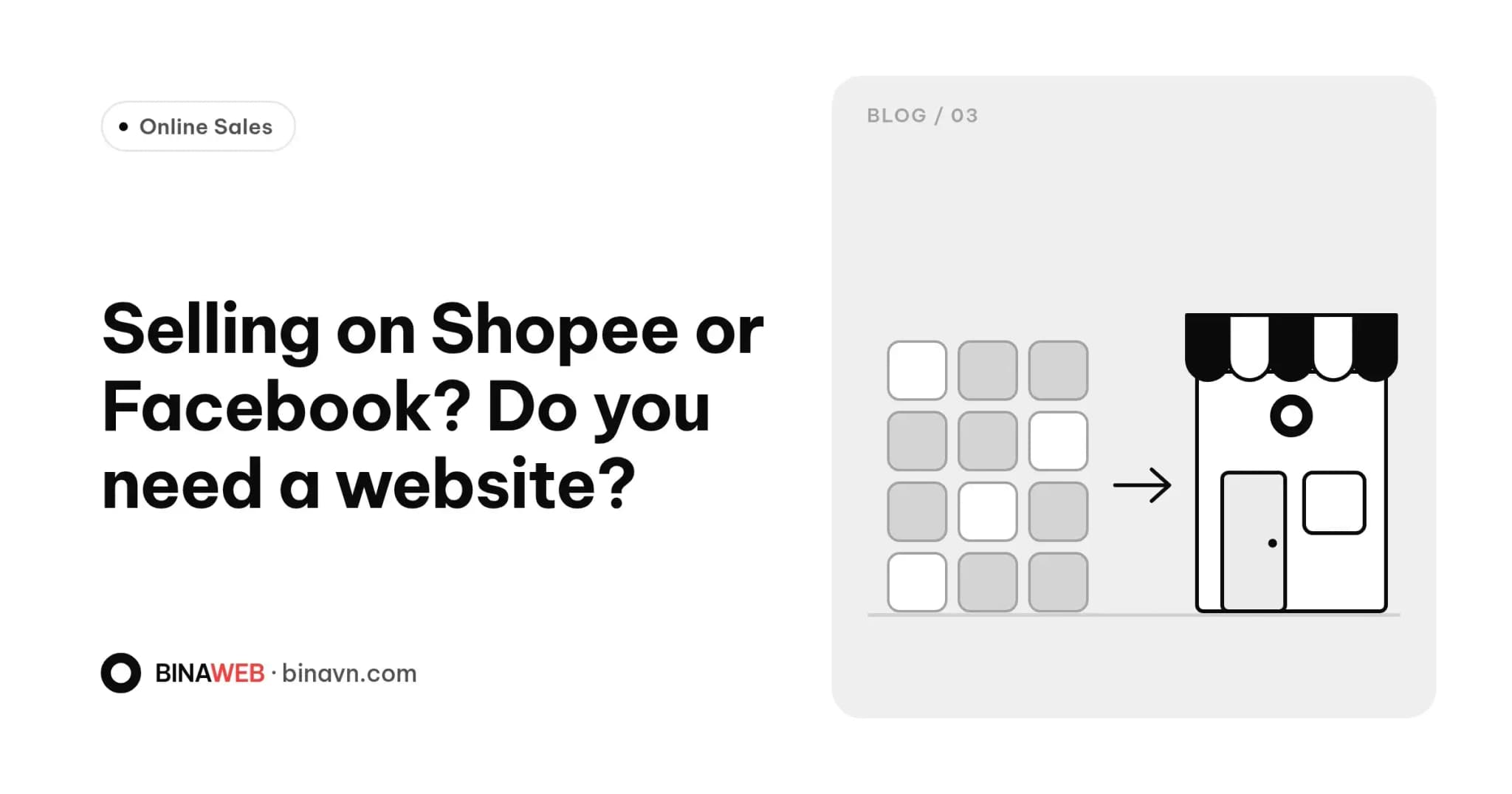
Your Shopee store gets steady orders, your Facebook page is active and customers message you every day. So do you really need a website as well, or is it just more cost and effort?
The honest answer: not everyone needs one right away. But for many sellers, a website is what makes a business less dependent on others and more durable. This guide helps you work out where you stand.
What marketplaces and social media do well
Let's be fair to the channels you already use:
- Built-in buyers. Shoppers are already there, searching and ready to buy.
- Payments and shipping included. No need to build your own systems.
- Fast start. You can open a store in no time.
- Platform trust. Many people feel safer buying on a marketplace with a returns policy.
For a new seller, this is usually the smartest way to validate a product. We are not suggesting you leave.
The limits of selling only on platforms
You're renting someone else's land
Your account, storefront and followers all live on someone else's platform. When policies change, fees rise, algorithms shift or an account gets flagged, you have very little say.
Building a brand is hard
On a marketplace, your product sits next to dozens of competitors in the same layout. Customers remember "I bought it on Shopee" more than your shop's name, and a product description box is no place for a brand story.
Competition drifts toward price
When everything is listed side by side and sorted by price, the pressure to discount is constant, and margins get thinner.
You don't own your customer relationships
It's hard to build your own list to follow up with, send offers to or tell about new products on your terms.
Fees and in-platform ads
Platform fees and the ad spend needed to stay visible are outside your control and can change over time.
What a website gives you that platforms don't
- A home you own. A domain with your brand name, content you control, a look that is yours. Whatever the platforms do, your site is where people can find you.
- Credibility with bigger buyers. Wholesale clients, distributors and overseas partners expect a proper website. A Facebook link often isn't enough.
- Visibility on Google. People search "where to buy [product]" or "is [brand] any good". Helpful content puts you in those results, even without ads.
- Room for your story. Ingredient sourcing, how things are made, the founder's story, usage guides: the reasons someone chooses you over a cheaper option.
- Data and relationships. When customers buy or sign up on your site, you can stay in touch. With analytics, you also learn where they come from and what they care about.
Signs it's time
Seriously consider a website if:
- Sales are steady and you want to build a long-term brand.
- You're starting to deal with wholesalers or distributors who want to see professional information.
- Customers ask "do you have a website?" or search your shop name on Google.
- You want to reduce reliance on a single channel.
- Your product needs explaining: handmade goods, regional food, technical products.
- You run ads and want your own landing page instead of sending people to a marketplace.
If you've only just started, the product isn't proven yet and money is tight, focus on marketplaces first. The website can come later.
You don't have to choose
Many brands give each channel a role:
- Marketplaces: catch active shoppers and ride big sale events.
- Social media: engage, share content, nurture a community.
- Website: the brand hub with full information, direct and wholesale orders, and traffic from Google.
Your website can still link to your Shopee store for customers who prefer buying there, and your Facebook page can point people to your site for the full story and policies.
Starting at a manageable size
Step 1: A simple brand site
Not ready to sell directly? Start with a site or landing page covering your brand, key products, contact details and links to where you sell. Bina's Standard Website starts from $199.
Step 2: Add online sales
Once demand is steady, upgrade to a store with a cart and an admin panel to manage products yourself. Our Conversion-Focused package starts from $399.
Step 3: Invest in content
Guides, product stories and FAQs are what help a site get found on Google over time.
Domain and hosting are free for the first year with Bina, so getting started costs less than you might expect. For a fuller picture of costs, read How much does a website cost in Vietnam?.
What to avoid
- Launching and forgetting. Outdated products, old prices and wrong contact details hurt trust more than having no site.
- Copy-pasting marketplace descriptions. Use the space to go deeper and sound like your brand.
- Expecting instant orders. A site takes time to be discovered, so use your existing channels to send people there.
The bottom line
Marketplaces and social media are a great start. A website doesn't replace them. It gives you a place of your own, room to build a brand and some insulation from platform changes.
On the fence? Tell Bina about your shop: what you sell, where you sell it and where you want to go. You'll be talking directly with the people who build the site, and we'll give you an honest view, even if the answer is "not yet". Our current packages are on the Services page.