You are about to run Facebook ads for a new product and someone says, "Just build a landing page." Fair enough, but what exactly is a landing page? How is it different from a website, and is it always the right call?
This guide covers what a landing page is, when it shines, when you need a fuller website, and what makes a landing page actually bring in customers.
What is a landing page?
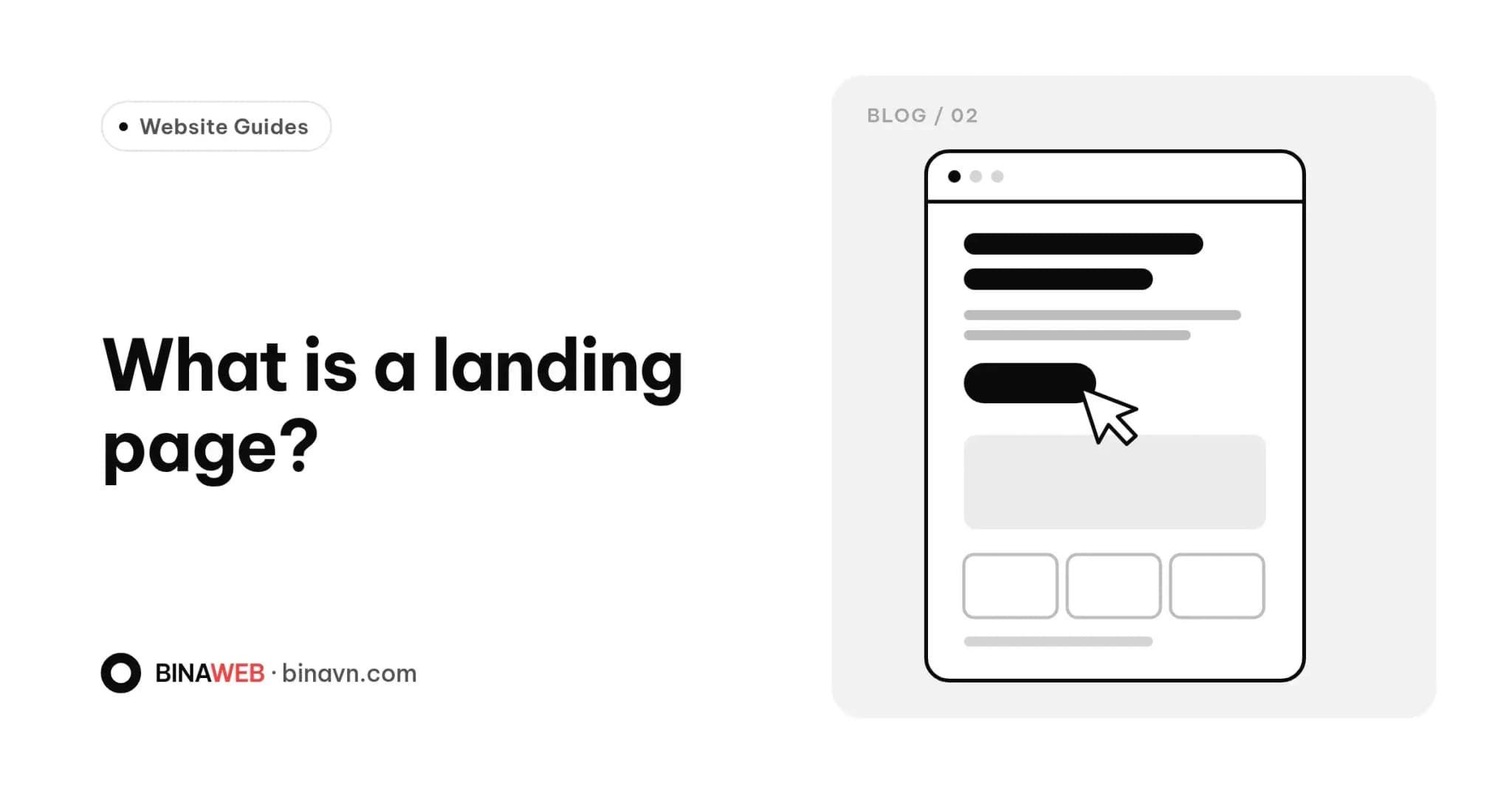
A landing page is a single web page built for one goal: getting a phone number, a trial sign-up, a booked consultation, a purchase, or a download.
Visitors usually "land" there after clicking an ad, an email link or a social post, which is where the name comes from.
The key difference from a regular website: a landing page doesn't try to tell your whole story. It focuses on one offer and removes anything that distracts from it.
Landing page vs. website
Think of a website as a shop with aisles, displays and an information desk. A landing page is a stand right at the entrance, selling one thing, with someone pointing you to the till.
Landing page | Full website | |
|---|---|---|
Goal | One specific action | Several: inform, sell, build trust |
Pages | Usually one | Many, with navigation |
Traffic | Mostly ads and campaigns | Search, referrals, social, ads |
Build time | Short | Longer, depending on scope |
Content | Short and focused | Broad and detailed |
They are not either/or. Many businesses keep a main site and spin up a landing page for each campaign.
When a landing page makes sense
You're advertising a specific product or offer
Send ad traffic to your homepage and people have to hunt for what they clicked on. A landing page that delivers exactly what the ad promised keeps them on track.
You want to test an idea
Before investing heavily, put up a landing page and see whether anyone bites: how many sign up, what they ask. It is a fast, low-cost reality check.
You need to launch quickly
Events, courses, pre-sales. When time is short, a tight landing page can go live far sooner than a multi-page site.
Your offer is simple
A photo studio, a class, a repair service. Sometimes one page that explains what you do, what it costs and how to get in touch is all you need to start.
When you'll outgrow a single page
Consider a full website when:
- You have several products or services that each deserve their own page.
- You want to be found on Google for many different searches. One page can't cover many topics well.
- You need long-term credibility: company story, past projects, helpful articles.
- You sell online with a cart, variants and stock.
- You want to update content yourself regularly through a CMS.
A sensible path for many businesses: start with a landing page to win early customers, then grow it into a website once you understand your audience better.
Anatomy of a landing page that works
There is no fixed formula, but good landing pages tend to include:
A headline that states the value
Within seconds, visitors should know what this is and why it matters to them. Skip vague lines like "The leading solution" and name the problem you solve.
Real, relevant visuals
Real product shots, real spaces, a short video of the product in use. Generic stock imagery rarely builds trust.
Benefits, not just features
"Five-stage filtration" is a feature. "Clean drinking water for the whole family without buying bottles" is a benefit. People buy the second.
Honest proof
Genuine reviews, photos of past work, certifications if you have them. Never invent numbers or testimonials. Sharp-eyed visitors notice, and lost trust is worse than no proof at all.
One clear call to action
One main button, one main action: "Book a call", "Get a quote", "Reserve a spot". On longer pages, repeat it where it naturally fits.
A short form
Ask only for what you truly need. Every extra field is another reason to leave. Name and phone number are often enough to start.
Answers to likely objections
A short FAQ handles worries about price, timing or warranty before anyone has to ask.
Common mistakes
- Too many calls to action. "Buy now", "browse products" and "follow our page" all at once leave visitors unsure what to do.
- Slow loading. Heavy images and effects make ad visitors bounce before the page appears.
- Mismatch with the ad. The ad says 30% off; the page doesn't mention it. People feel misled.
- Not built for mobile. Most social traffic is on phones.
- No tracking. Without analytics you can't tell which ad works or where people drop off.
How long does it take and what does it cost?
It depends on complexity and whether your content is ready. A focused landing page with clear content can be done quickly. Bina's Standard Website package suits this well, includes a CMS and starts from $199 and includes a free domain and hosting for the first year. To compare with other types of sites, see How much does a website cost in Vietnam?.
The bottom line
A landing page is a focused tool: one page, one goal, one action. It's ideal for ad campaigns, testing new ideas or launching fast, and it can grow into a full website later without starting over.
Weighing up a landing page against a full site? Browse our Services or drop Bina a line about your product, and we'll suggest the right starting point before you commit.